
Key Takeaway: Restaurant SEO success comes down to three priorities: optimize your Google Business Profile first, actively manage reviews second, and ensure your website is mobile-fast with the right keywords third. Get these fundamentals right before anything else.
Here’s a statistic that should change how you think about restaurant marketing: 46% of all Google searches have local intent, and 76% of people who search for a local business visit within 24 hours. For restaurants, these numbers are even more dramatic because hungry people don’t browse, they decide.
Yet most restaurant owners hand over 30% of every order to food delivery apps while ignoring the free traffic Google sends their way. They pay for Instagram ads that disappear the moment the budget runs dry. They watch competitors fill tables while their own dining room sits half-empty during prime hours.
The difference often comes down to one thing: visibility in local search results.
This guide provides a complete framework for restaurant SEO, covering everything from Google Business Profile optimization to technical website improvements. These are the same strategies that work for professional service firms like architects adapted specifically for the unique challenges restaurants face: high competition, visual-first discovery, and the constant pressure of local relevance.
You won’t need an SEO agency to implement most of what follows. What you will need is consistency and a willingness to treat your online presence as seriously as you treat your kitchen.
Does SEO Actually Work for Restaurants?
Restaurant SEO is fundamentally different from general SEO, and understanding why determines whether your efforts succeed or waste time.
Traditional SEO focuses on ranking nationally or globally for broad keywords. Restaurant SEO is hyper-local by design. You don’t need to rank for “best Italian food” worldwide. You need to rank for “Italian restaurant downtown Austin” or “pizza near me” when someone is physically close to your location. Understanding how search rankings work helps explain why this local focus is so powerful.
This hyper-local focus actually makes restaurant SEO more achievable than most business owners realize. You’re not competing against every website on the internet. You’re competing against the 20-50 other restaurants in your immediate area. Many of them are doing nothing beyond having a Facebook page.
Restaurant Search Behavior Statistics
- 76% of people who search “restaurant near me” visit a business within 24 hours (Think with Google)
- 88% of consumers trust online reviews as much as personal recommendations (BrightLocal)
- 70% of restaurant searches happen on mobile devices (Google)
- The average person spends 79 minutes per week deciding where to eat
The compound effect of SEO matters here. Paid advertising stops working the moment you stop paying. The delivery apps take their cut forever. But a well-optimized Google Business Profile and website keep generating traffic month after month, year after year, without additional cost.
One important reality check: SEO amplifies what’s already working. If your food is mediocre and service is poor, more visibility just means more people discover those problems faster. The restaurants that benefit most from SEO are already good at what they do and simply need more people to find them.
Google Business Profile Optimization
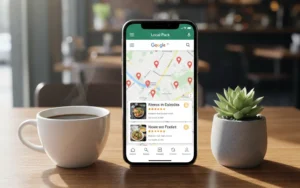
Your Google Business Profile is the single most important factor in local restaurant SEO. It determines whether you appear in the local pack (those three businesses shown with a map), influences your position in Google Maps, and directly impacts phone calls, directions requests, and website clicks.
According to BrightLocal’s research on local ranking factors, Google Business Profile signals account for the largest share of local pack ranking factors. This isn’t where you cut corners.
Claiming and Verifying Your Profile
Start by searching your restaurant name on Google. If a profile exists but you don’t control it, click “Claim this business” and follow the verification process. Google typically verifies restaurants via postcard, phone call, or email.
Common verification issues restaurants face include address discrepancies between your GBP and other online listings, multiple unclaimed profiles for the same location (often from previous owners), and shared kitchen spaces requiring specific verification approaches.
If you encounter verification problems, request a video verification as an alternative. Google has expanded verification options for businesses that struggle with traditional verification methods.
Optimizing Your Restaurant Profile
Categories matter more than most restaurant owners realize. Your primary category should be the most specific option that accurately describes your restaurant. “Italian Restaurant” outperforms “Restaurant” every time. Add secondary categories for additional specificity: “Pizza Restaurant,” “Wine Bar,” or “Catering Service” if applicable.
Your business description should naturally include your primary keywords without sounding robotic. Focus on what makes your restaurant unique, the cuisine you serve, and your location. Google allows 750 characters, but the first 250 characters appear in search results, so front-load the important information.
Hours accuracy cannot be overstated. Update holiday hours proactively. Nothing destroys trust faster than a customer arriving to find you closed when Google said you’d be open.
Attributes signal important information to searchers: outdoor seating, wheelchair accessibility, delivery options, reservation requirements. Check these quarterly because Google adds new attributes regularly.
GBP Posts and Updates
Google Business Profile posts keep your listing fresh and signal activity to Google’s algorithm. For restaurants, the most effective post types include weekly specials announcements, seasonal menu changes, special events (wine tastings, live music, holiday menus), and limited-time offers with clear expiration dates.
Post at least weekly. Include a photo with every post. Add a call-to-action button (Order Online, Call Now, Reserve) when relevant.
For a comprehensive deep dive into maximizing your profile’s organic reach, see our complete guide to generating organic visits for Google Business Profile.
Local Keyword Strategy for Restaurants
Restaurant searches follow predictable patterns that differ from other industries. Understanding these patterns helps you target the right keywords across your online presence.
Understanding Restaurant Search Patterns
The “near me” modifier dominates restaurant searches. “Thai food near me,” “brunch near me,” and “restaurants near me” generate massive search volume because Google personalizes these results based on the searcher’s location. You don’t need to rank nationally for these terms. You need to rank when someone searches from within your service area.
Geographic modifiers are equally important: “Mexican restaurant downtown Denver,” “seafood restaurant Marina District,” or “best sushi Williamsburg Brooklyn.” These searches indicate higher intent because the person already knows where they want to eat.
Dish-specific searches represent an underutilized opportunity: “best tacos in Austin,” “who has the best pad thai in Seattle,” or “authentic Neapolitan pizza Chicago.” Ranking for these specific queries often means appearing in front of highly motivated diners.
Finding Your Restaurant’s Keywords
Start with Google’s free tools. Type your cuisine type into Google and watch autocomplete suggestions populate. These suggestions represent actual search behavior. “Italian restaurant” might autocomplete to “Italian restaurant with outdoor seating,” “Italian restaurant open late,” or “Italian restaurant good for groups.”
The “People Also Ask” section reveals questions your potential customers ask. Answer these questions on your website and in your Google Business Profile Q&A section.
Google Trends shows seasonal patterns. “Patio dining” spikes in spring. “Restaurants open on Christmas” peaks in December. Plan content around these predictable trends.
Analyzing competitor keywords helps identify gaps. What terms do the top-ranking restaurants in your area target that you’re missing?
Where to Use Your Keywords
Your homepage title tag should include your primary keyword, cuisine type, and location: “Bella Notte | Italian Restaurant in Downtown Austin | Fresh Pasta & Wood-Fired Pizza.”
Meta descriptions should mention your neighborhood, cuisine, and a compelling reason to choose you: “Family-owned Italian restaurant serving handmade pasta and wood-fired pizza in downtown Austin since 1995. Reservations available.”
Your Google Business Profile business description should weave keywords naturally while telling your story. Menu page titles should be descriptive: “Dinner Menu | Authentic Italian Dishes | Bella Notte Austin” rather than simply “Menu.” For more local restaurant marketing tactics, see our dedicated guide.
Review Management and Reputation
Reviews function as both a ranking factor and a conversion factor for restaurants. Google’s algorithm considers review quantity, velocity (how frequently you receive reviews), recency, and even the keywords contained within review text.
Beyond rankings, reviews directly impact whether someone chooses your restaurant over competitors. According to BrightLocal’s consumer review survey, 94% of consumers say reviews have influenced their purchasing decisions.
Why Reviews Matter for Restaurant SEO
Reviews serve as a direct ranking signal in local search results. More positive reviews, especially recent ones, correlate with higher local pack positions. Reviews also influence click-through rates from search results, as star ratings appear prominently in both organic and local pack listings.
The keywords within reviews matter too. When customers mention “amazing lobster rolls” or “best brunch spot,” those terms can help you rank for related searches.
Getting More Reviews Ethically
The most effective review generation happens immediately after a positive experience. Train your staff to recognize satisfied customers and mention reviews naturally: “If you enjoyed your meal, we’d really appreciate a Google review. It helps other people find us.”
Physical prompts work well for restaurants. QR codes on receipts, table tents, or menu inserts that link directly to your Google review page reduce friction significantly.
Email and SMS follow-ups after reservations or online orders can request reviews, but timing matters. Send these within 24-48 hours while the experience remains fresh.
Never incentivize reviews with discounts or freebies. This violates Google’s review guidelines and can result in reviews being removed or your profile being penalized. Never “review gate” by only directing satisfied customers to leave reviews while routing complaints elsewhere.
Responding to Reviews
Responding to every review, positive and negative, signals engagement to Google and shows future customers you care about feedback.
For positive reviews, personalize your response by referencing specific dishes or experiences they mentioned. Include a natural keyword: “Thank you for visiting our Italian restaurant! We’re so glad you enjoyed the handmade pasta.” Invite them to return for seasonal specials or new menu items.
For negative reviews, respond within 24-48 hours with empathy rather than defensiveness. Acknowledge their experience without making excuses. Offer to make it right and take the conversation offline: “We’re sorry your experience didn’t meet expectations. Please contact us directly at [email] so we can make this right.”
For comprehensive strategies on managing your restaurant’s online reputation, see our detailed guide.
Restaurant Website Optimization
Your website remains important even in an era dominated by Google Business Profile and social media. It’s the only online property you fully control, and it provides opportunities for keyword targeting that other platforms don’t allow.
Mobile-First Design Is Non-Negotiable
Over 70% of restaurant searches happen on mobile devices. If your website doesn’t work perfectly on phones, you’re losing the majority of potential customers.
Mobile-first means more than responsive design. It means click-to-call buttons prominently placed. It means menus that are readable without zooming. It means directions and hours visible without scrolling. Test your website by actually using it on a phone while hungry. That experience determines whether visitors become customers.
Page Speed for Restaurants
Hungry people don’t wait for slow websites. According to Google’s Core Web Vitals guidelines, your Largest Contentful Paint (LCP) should be under 2.5 seconds.
Restaurant websites often suffer from image bloat. High-resolution food photography is essential for appeal but murder on load times if not optimized properly. Compress all images using WebP format. Implement lazy loading so images below the fold don’t delay initial page load. Set explicit width and height attributes to prevent layout shift.
A slow website doesn’t just frustrate users. It hurts rankings. Google uses page speed as a ranking factor, particularly for mobile searches.
Essential Pages Every Restaurant Needs
Your homepage establishes relevance and trust. Include your primary keywords, cuisine type, neighborhood, and a clear value proposition above the fold. Feature your best food photography and make reservations or ordering immediately accessible.
Your menu page should use HTML text, not just an embedded PDF. PDFs can’t be indexed effectively by search engines, and they’re frustrating on mobile. If you must use a PDF for detailed menus, also include an HTML version of your key items with descriptions that include relevant keywords.
Your about page tells your story and builds emotional connection. Include your history, philosophy, chef background, and what makes you different. This page often ranks for branded searches and helps establish trust.
Your contact and location page should include your full address, phone number, hours, and an embedded Google Map. Include parking information and nearby landmarks. This is where schema markup becomes especially important.
Your reservations page should make booking effortless. If you use a third-party reservation system, ensure the integration doesn’t create a confusing user experience.
Schema Markup for Restaurants
Schema markup helps search engines understand your content and can enable rich results that make your listings stand out. Most restaurants miss this entirely, which means implementing it properly creates competitive advantage.
According to Google’s structured data documentation, LocalBusiness schema can enhance how your business appears in search results.
Restaurant Schema Types
The Restaurant schema (a subtype of LocalBusiness) should include your name, address, phone number, hours, cuisine type, price range, and accepted payment methods. This schema powers the knowledge panel that appears for branded searches.
{
  "@context": "https://schema.org",
  "@type": "Restaurant",
  "name": "Bella Notte",
  "image": "https://example.com/photos/bella-notte.jpg",
  "address": {
    "@type": "PostalAddress",
    "streetAddress": "123 Main Street",
    "addressLocality": "Austin",
    "addressRegion": "TX",
    "postalCode": "78701",
    "addressCountry": "US"
  },
  "geo": {
    "@type": "GeoCoordinates",
    "latitude": 30.2672,
    "longitude": -97.7431
  },
  "telephone": "+1-512-555-0123",
  "servesCuisine": "Italian",
  "priceRange": "$$",
  "openingHoursSpecification": [
    {
      "@type": "OpeningHoursSpecification",
      "dayOfWeek": ["Monday","Tuesday","Wednesday","Thursday","Friday"],
      "opens": "11:00",
      "closes": "22:00"
    },
    {
      "@type": "OpeningHoursSpecification",
      "dayOfWeek": ["Saturday","Sunday"],
      "opens": "10:00",
      "closes": "23:00"
    }
  ],
  "menu": "https://example.com/menu",
  "acceptsReservations": "True",
  "hasMap": "https://maps.google.com/?cid=123456789"
}
Menu schema allows you to mark up individual menu items with names, descriptions, and prices. While Google doesn’t currently use this for rich results, it helps search engines understand your offerings and can improve relevance for dish-specific searches. See Schema.org’s Menu documentation for implementation details.
AggregateRating schema can display your star rating directly in search results if you have reviews on your website. This significantly improves click-through rates.
When combined with a properly optimized Google Business Profile, schema markup creates a powerful one-two punch for local visibility. See our restaurant GBP optimization guide for the complete picture.
Content Marketing for Restaurants
Beyond your core pages, content marketing builds topical authority and captures additional search traffic. Not every restaurant needs a blog, but strategic content can differentiate you from competitors.
Blog post ideas that attract search traffic include “best [dish] in [city]” guides where you can naturally mention your own restaurant alongside others, recipe content from your kitchen that showcases expertise and creates shareable assets, local food scene commentary that positions you as a community authority, and behind-the-scenes content featuring your team, sourcing practices, and cooking techniques.
Content about local events, neighborhood guides, and food-adjacent topics (wine pairing guides, hosting tips) can attract links and establish your restaurant as more than just a place to eat.
Social media integration supports SEO indirectly. While social signals aren’t direct ranking factors, content that performs well socially tends to earn links, brand searches, and other signals that do impact rankings.
Next Steps
Restaurant SEO success comes from consistency rather than perfection. Start with your Google Business Profile because it delivers results fastest. Move to review management because it impacts both rankings and conversions. Then optimize your website for the mobile-first searchers who make up most of your potential customers.
Don’t try to implement everything at once. Pick one section of this guide, implement it fully, then move to the next. A well-optimized Google Business Profile alone can transform your visibility within weeks.
For restaurants in competitive markets or those wanting faster results, professional SEO support accelerates timelines and handles technical complexity. Learn how an SEO strategist can help your restaurant attract more diners through organic search.
Restaurant SEO Resource Hub
This guide covers the fundamentals of restaurant SEO. For deeper dives into specific topics, explore our complete restaurant SEO series:
Google Business Profile for Restaurants
Complete GBP setup and optimization. Category selection, posting strategies, and local pack rankings.
Local SEO for Restaurants
Dominate “near me” searches with NAP citations, geo-modified keywords, and hyperlocal content.
Restaurant Review Management
Review generation tactics, response templates, and turning reputation into ranking assets.
Frequently Asked Questions
Does SEO work for restaurants?
Yes, SEO works exceptionally well for restaurants. With 46% of all Google searches having local intent and 76% of people who search for a local business visiting within 24 hours, restaurants are ideally positioned to benefit from SEO. Unlike paid advertising that stops when you stop paying, SEO builds lasting visibility that compounds over time.
How long does restaurant SEO take to work?
Restaurant SEO typically shows initial results within 3-6 months, with significant improvements in 6-12 months. Google Business Profile optimizations can show results faster, sometimes within weeks. The timeline depends on competition in your area, your current online presence, and how consistently you implement SEO best practices.
What is the 30/30/30/10 rule for restaurants?
The 30/30/30/10 rule is a restaurant financial guideline suggesting: 30% of revenue for food costs, 30% for labor, 30% for overhead (including marketing and rent), and 10% profit margin. From an SEO perspective, this highlights why free organic traffic matters so much because it reduces marketing costs within that 30% overhead allocation.
How much does restaurant SEO cost?
Restaurant SEO costs vary widely. DIY approaches are free but time-intensive. Professional local SEO services typically range from $500-2,500 per month depending on competition and scope. Many restaurants start with Google Business Profile optimization (which is free) before investing in comprehensive SEO services.
Can I do restaurant SEO myself?
Yes, many restaurant SEO fundamentals can be done yourself. Start with claiming and optimizing your Google Business Profile, collecting reviews, and ensuring your website has accurate information. As you grow, you may want professional help for technical SEO, content strategy, and competitive markets.
Need Help With Your Restaurant’s SEO?
Get a customized strategy for your specific market and competition level. Work With an SEO Strategist